
The Supreme Court has directed the Election Commission to investigate allegations of false Form 7 applications being filed for the deletion of electors in the Mustafabad assembly constituency in Delhi. The plea highlighted reports of fraudulent applications, some filed in the names of booth level agents who denied knowledge, and others claiming living individuals were dead or had moved. The EC is tasked with verifying these claims and taking remedial action.

"There is bound to be revision," the top court said, "otherwise, how will the poll panel delete the names of those who are dead, migrated or shifted to other constituencies?"

Olympic gold medallist Abhinav Bindra has called for greater transparency and fairness in the electoral processes of India's sports governance system, highlighting an inconsistency between the Indian Olympic Association (IOA) Constitution and the rules followed during recent Sportspersons of Merit (SOM) elections.

The West Bengal government has transferred over 500 bureaucrats ahead of the Special Intensive Revision (SIR) of electoral rolls. The move has drawn criticism from the opposition BJP, who allege it is an attempt to manipulate the electoral process.

Uttar Pradesh Chief Electoral Officer Navdeep Rinwa clarified that the Election Commission's database does not store voter religion information, refuting claims of a conspiracy to target specific communities. This statement comes after Chief Minister Yogi Adityanath's remarks about "missing" Hindu voters and subsequent allegations from the Samajwadi Party. Rinwa explained that any analysis of voter religion by external parties is based on publicly available voter lists and software tools, not EC data.

The Election Commission has revised the schedule for the Special Intensive Revision of electoral rolls in Maharashtra, Andhra Pradesh, Haryana, Telangana, Nagaland, and Delhi, extending deadlines for claims, objections, and final publication dates following requests from chief electoral officers.

The Supreme Court clarified on Wednesday that it has not yet made a final ruling on the legality of the Election Commission's "logical discrepancy" category used for scrutinising voter details during the Special Intensive Revision of electoral rolls. The court noted that its previous permission for this exercise in West Bengal was only an interim arrangement and its Bihar SIR decision was not a final determination of all related issues.

Special Intensive Revision of electoral rolls in Bihar reveals millions of voters missing or deceased, prompting Election Commission action.
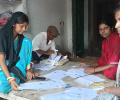
The Election Commission of India is conducting a special intensive revision of the electoral roll in Bihar, with over 6.60 crore electors expected to be included in the draft roll.
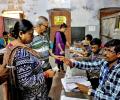
A plea has been filed in the Supreme Court seeking Special Intensive Revision (SIR) of electoral rolls, particularly before parliamentary, state assembly and local body elections. The court has agreed to hear a batch of petitions challenging the Election Commission's decision to undertake special intensive revision of electoral rolls in Bihar.

Boxing Federation of India (BFI) president Ajay Singh has expressed strong disappointment after the federation was denied voting rights in the upcoming Indian Olympic Association (IOA) elections. Singh claims the exclusion is unjustified, especially given a directive from the International Olympic Committee (IOC) allowing BFI to vote, and demands an explanation from the IOA. The BFI is currently embroiled in an internal power struggle, which may be a factor in its exclusion.
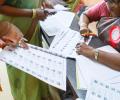
Bengaluru's electorate has significantly decreased by 43.13% to 59.08 lakh after the Special Intensive Revision (SIR) process and the publication of the final electoral roll on October 27. This reduction is largely due to deletions under the ASDDO category (Absent, Shifted, Dead, Duplicate, Others), with Bengaluru South and Mahadevapura seeing the highest number of removals. Despite the deletions, the Chief Electoral Officer assured that no eligible voter was removed and the process was transparent.

Delhi's draft electoral rolls show a significant reduction in voters, with affluent constituencies experiencing a higher percentage drop (37.4%) compared to areas with unauthorised colonies and Jhuggi-Jhopdi clusters (35.7%). Overall, 47.5 lakh voters have been excluded, with officials noting Delhi's exclusion rate is the highest among states undertaking Special Intensive Revision. Citizens have until September 30 to file claims and objections before the final roll is published on November 4.
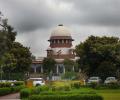
The Supreme Court has agreed to hear a plea challenging the Election Commission's decision to conduct Special Intensive Revision (SIR) of electoral rolls in Tamil Nadu, Kerala and West Bengal. The court is also addressing concerns about disenfranchisement and citizenship issues related to the revision process.

More than 2.06 crore electors, representing 21.14 per cent of Maharashtra's previous voter base, have been excluded from the draft electoral roll following a Special Intensive Revision (SIR) due to reasons like being untraceable, deceased, or having shifted residences.
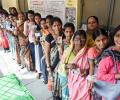
Data from the State Election Commission reveals that over 11 lakh voters in Mumbai have duplicate enrolments in the electoral roll. The SEC has extended the deadline for submitting objections, and opposition leaders have alleged irregularities in the voter list revision.

Goa Forward Party chief Vijai Sardesai has alleged that Nepalese nationals were added to the state's electoral rolls during the Special Intensive Revision (SIR) and that voters were illegally shifted between constituencies. He has demanded an impartial investigation into these alleged irregularities, calling for deletion of illegal entries and action against those responsible.

A faction of the Ice Hockey Association of India (IHAI) has moved the Delhi High Court to challenge the inclusion of IOA president PT Usha in the electoral rolls for the upcoming December 5 elections. They argue Usha was not a member of IHAI and that the nominating faction lacks legal authority. Separately, the Indian Golf Union (IGU) has also approached the High Court after being excluded from the list of eligible voters.

A panel of retired Supreme Court and High Court judges, part of an Independent Commission on Special Intensive Revision (SIR), held a public hearing on Thursday to address widespread deletions from India's electoral rolls. Testimonies from affected citizens, including a former MP and a Delhi resident declared deceased by the Election Commission, highlighted significant issues. The SIR process, initiated in 2025, has led to the removal of approximately 13 crore voters nationwide, with substantial deletions reported in Delhi and Uttar Pradesh.

The Election Commission of India has introduced a mandatory declaration for new voters, requiring them to provide parental details from the Special Intensive Revision (SIR) exercise. This move, aimed at streamlining voter mapping, has sparked controversy, with some Election Commissioners deeming it "illegal" and "unauthorised" due to potential negative impacts on young voters.

The Election Commission on Monday defended its decision to conduct the Special Intensive Revision (SIR) of electoral rolls in the Supreme Court, saying the exercise was undertaken in accordance with the law and the three orders on its roll-out were approved unanimously by the Commission's three members.

Karnataka's final electoral roll, published on Tuesday, shows a significant reduction of nearly one crore voters following the Special Intensive Revision (SIR) process, bringing the total count to 4.55 crore from 5.54 crore.

Congress leader Rahul Gandhi and other INDIA bloc leaders have moved the Supreme Court seeking permission to submit 48 written questions to the Election Commission regarding its decision-making process for the nationwide Systemic Improvement of Electoral Rolls (SIR). The plea aims to get sworn responses from EC officials on alleged voter exclusions and changes to online registration systems, questioning the transparency and collective decision-making within the EC.

The Supreme Court has instructed the Election Commission to probe allegations of irregularities, specifically concerning bulk Form 7 applications, during the special intensive revision of electoral rolls in Uttar Pradesh. The court's directive came after petitioners raised concerns about the deletion of voters' names, with the EC acknowledging bulk submissions but stating they were not acted upon due to being false.

The Gauhati High Court has ruled that a PAN card and an Electoral Photo Identity Card (EPIC) alone are insufficient to establish Indian citizenship or family relationships without supporting records. The court upheld a Foreigners Tribunal's decision declaring a woman from Darrang district a foreigner, dismissing her writ petition. The ruling emphasizes the need for comprehensive documentation beyond these common identity proofs in citizenship cases.

The Supreme Court is set to hear a plea filed by Congress leader Rahul Gandhi and other opposition figures on Thursday regarding alleged large-scale voter deletions and irregularities in the Special Intensive Revision of electoral rolls. The petition seeks an independent audit of these deletions and modifications, and a direction to prevent further deletions without due process.
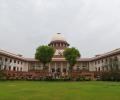
The Supreme Court clarified on Monday that it had not adjudicated on the new Form 6, used for inclusion in electoral rolls, during its hearing on the Special Intensive Revision (SIR) of electoral rolls in Bihar. This clarification comes after the Election Commission's press release suggested the apex court had upheld the Form 6 declaration.
The Election Commission will publish the draft electoral rolls for Bihar assembly polls, triggering a period for claims and objections amid fears of voter exclusion.

The Election Commission of India has told the Delhi high court that two voters, whose names were deleted from the electoral rolls after they could not complete the enumeration process during the Special Intensive Revision in the national capital, can fill Form 6 for redressal of their grievance.
The Election Commission has announced a Special Summary Revision of electoral rolls in 17 states and Union territories, including those facing assembly polls next year. This initiative aims to enrol new voters, correct existing entries, and enhance the accuracy of voter lists, with January 1, 2027, set as the qualifying date.

Uttarakhand's final electoral roll, released after the Special Intensive Revision, shows a significant reduction of approximately 8 lakh voters compared to the start of the process, with the total now standing at 71.58 lakh. The opposition Congress, however, claims the decline is much steeper, citing a 14 lakh reduction from an earlier figure. The Chief Electoral Officer's office detailed the revision process, including additions and removals, and outlined ongoing efforts to ensure all eligible citizens are included.

Activists Prashant Bhushan, Anjali Bharadwaj, Yogendra Yadav, and Neha Bora have raised serious questions about the Election Commission's decision-making process for the nationwide Special Intensive Revision (SIR) of electoral rolls. They allege contradictions in the EC's statements, lack of transparency regarding decisions, concerns over centralisation of the electoral database, and unauthorised changes to Form 6, calling for greater accountability and disclosure of records.

The Election Commission of India clarified to the Bombay High Court that the absence of a voter's name from a draft Special Intensive Revision (SIR) roll does not equate to deletion, as SIR is a fresh preparation of the electoral roll. This clarification came during a hearing on a writ petition filed by a Goa resident whose family's names were missing from the SIR roll. The court has reserved its verdict.

The Election Commission has extended the Special Intensive Revision of electoral rolls in Maharashtra by 10 days, moving the deadline to August 8. This extension also shifts the draft electoral roll publication to August 18, as part of ongoing efforts to update and verify voter information through house-to-house checks and document submissions.

India's Election Commission's centralised voter database systems, ERONET and ECINet, are under scrutiny following concerns raised by Election Commissioners Sukhbir Singh Sandhu and Vivek Joshi regarding the centralisation of electoral rolls and control available to state election officials. The article explains how these systems work and why they are currently in the news.
The Supreme Court will hear a plea on October 28 regarding the Special Intensive Revision (SIR) of Delhi's electoral roll. Petitioners seek transparency from the Election Commission on voter deletion reasons and a simplified re-inclusion process for those omitted, especially concerning Form 6. The court had previously raised concerns about "mechanical" notice issuance during the SIR, which led to 47 lakh voter deletions in Delhi.

Ladakh representatives express apprehension over the timing of hill council elections, alleging it's a ploy to weaken their collective leadership ahead of crucial talks with the Centre. They demand postponement of the December 4 elections due to winter migration and electoral roll discrepancies, while the Centre is reportedly willing to hold talks between December 5 and 10.

Several political parties in Tamil Nadu, including the ruling TVK and opposition DMK, walked out of an all-party meeting convened by the Election Commission. They demanded the resignation of Chief Election Commissioner Gyanesh Kumar, citing alleged irregularities and a lack of transparency in the previous Special Intensive Revision of electoral rolls, where millions of voters were reportedly removed or flagged. The AIADMK and BJP attended the meeting, with AIADMK also raising concerns about the large number of affected voters.

Union Home Minister Amit Shah on Thursday said that Rahul Gandhi has turned creating ruckus in Parliament and resorting to boycotts into a Congress culture.

The Election Commission of India has introduced new restrictions on the number of Form 7 applications an individual can submit, both online and offline. This move aims to prevent bulk or malicious attempts to remove legitimate voters from electoral rolls and streamline the objection process, especially after reports from states like Karnataka and Odisha.
